

Ultrasound Guided
Arthrosamid Injections
Arthrosamid is an injectable treatment developed to ease the symptoms of osteoarthritis, a condition marked by the gradual breakdown of joint cartilage. It is intended for patients with mild to severe knee arthritis cases, where pain, stiffness, and limited movement are common. Its formulation and mechanism make it especially effective for use in the knee joint, where osteoarthritis often has a major impact.
This treatment is made from a synthetic, biocompatible hydrogel designed to replicate the characteristics of healthy joint fluid. It consists of polyacrylamide particles suspended in a saline solution. Once injected into the joint, Arthrosamid helps restore lost synovial fluid, decreases friction between joint surfaces, and provides cushioning to absorb impact during movement.
Arthrosamid has shown strong results in reducing joint pain and enhancing function. Clinical research reports meaningful decreases in pain levels, improved mobility, and better overall quality of life for patients receiving the injections. Additionally, it has demonstrated a good safety profile, with minimal side effects or complications reported.
The injection is performed using an ultrasound-guided technique, which allows for precise placement of the hydrogel within the knee joint and helps optimise treatment outcomes.
What Is Arthrosamid?
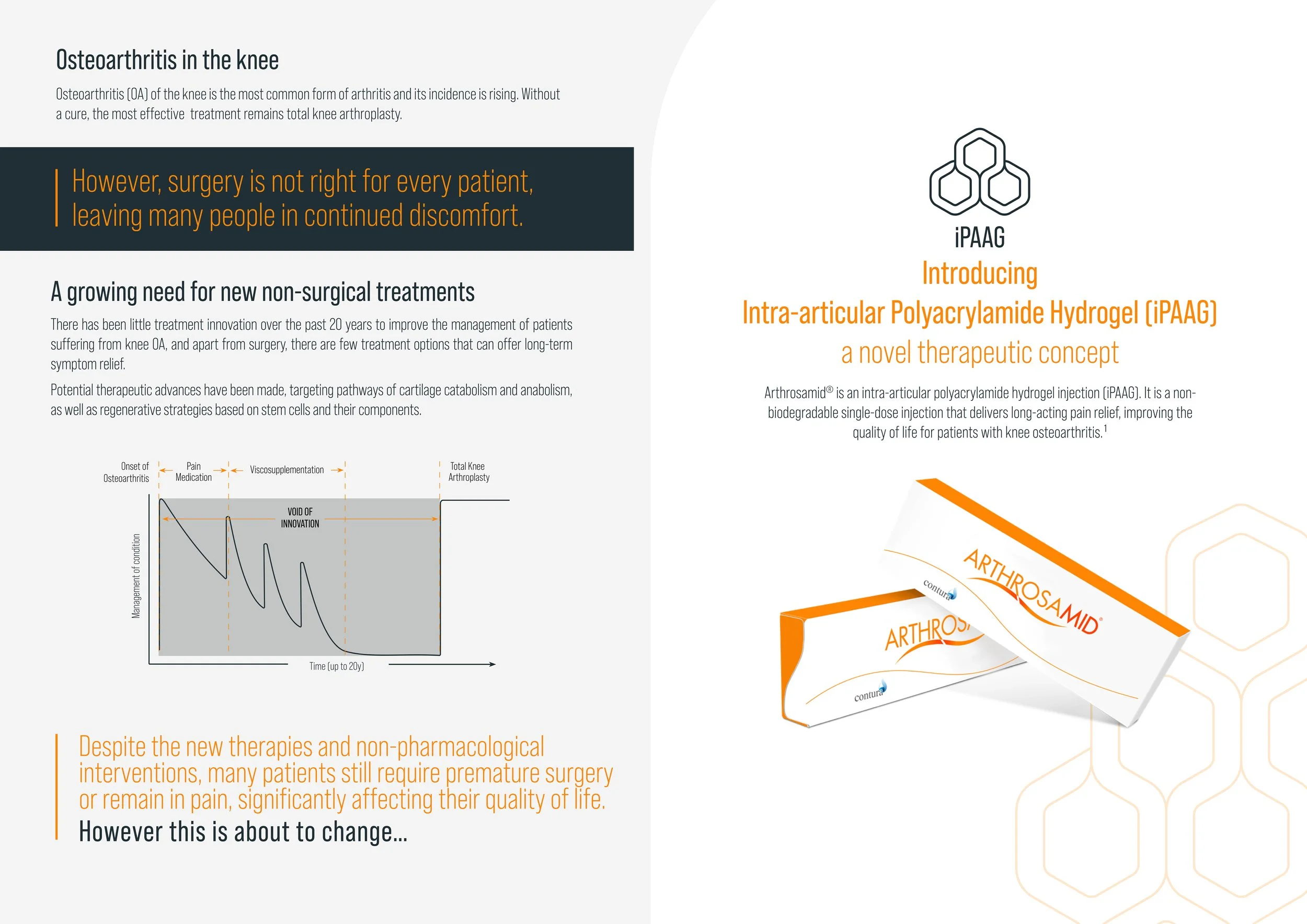
Arthrosamid® is an innovative treatment for knee osteoarthritis that serves as an alternative to existing therapies. It is based on a non-biodegradable hydrogel composed of 2.5% cross-linked polyacrylamide and 97.5% water. A single injection into the knee provides cushioning and pain relief, offering long-lasting and safe symptom control.
How Does It Work?
Arthrosamid® is an intra-articular polyacrylamide hydrogel injection used to treat knee osteoarthritis symptoms. After being injected into the joint cavity, it enhances the viscosity of the synovial fluid, improving lubrication and shock absorption. It also integrates with the synovial lining of the joint capsule, creating a cushioning effect.
The Benefits of Arthrosamid
By cushioning the joint, Arthrosamid® can help reduce pain, ease stiffness, and improve mobility. It has been shown to be safe and provides long-term pain relief, contributing to a better quality of life.
What Is Knee Osteoarthritis?
Knee osteoarthritis (arthritis that affects the knee bones/joints) is a long-term condition that worsens over time, causing pain and disability. It is most common in the knee joint, where it wears away the shock-absorbing cartilage and causes the bones to rub together. As a result the joint becomes stiff, swollen and painful.
No one knows exactly what causes knee osteoarthritis. There is no permanent cure and, until now, treatments have focused on managing the symptoms. They include:
EXERCISE
WEIGHT LOSS
PAIN RELIEF MEDICATION
VISCOSUPPLEMENT INJECTIONS
BRACES
PHYSIO
When these therapies fail total knee replacement surgery is often the only option. Things are about to change.
Arthrosamid Procedure
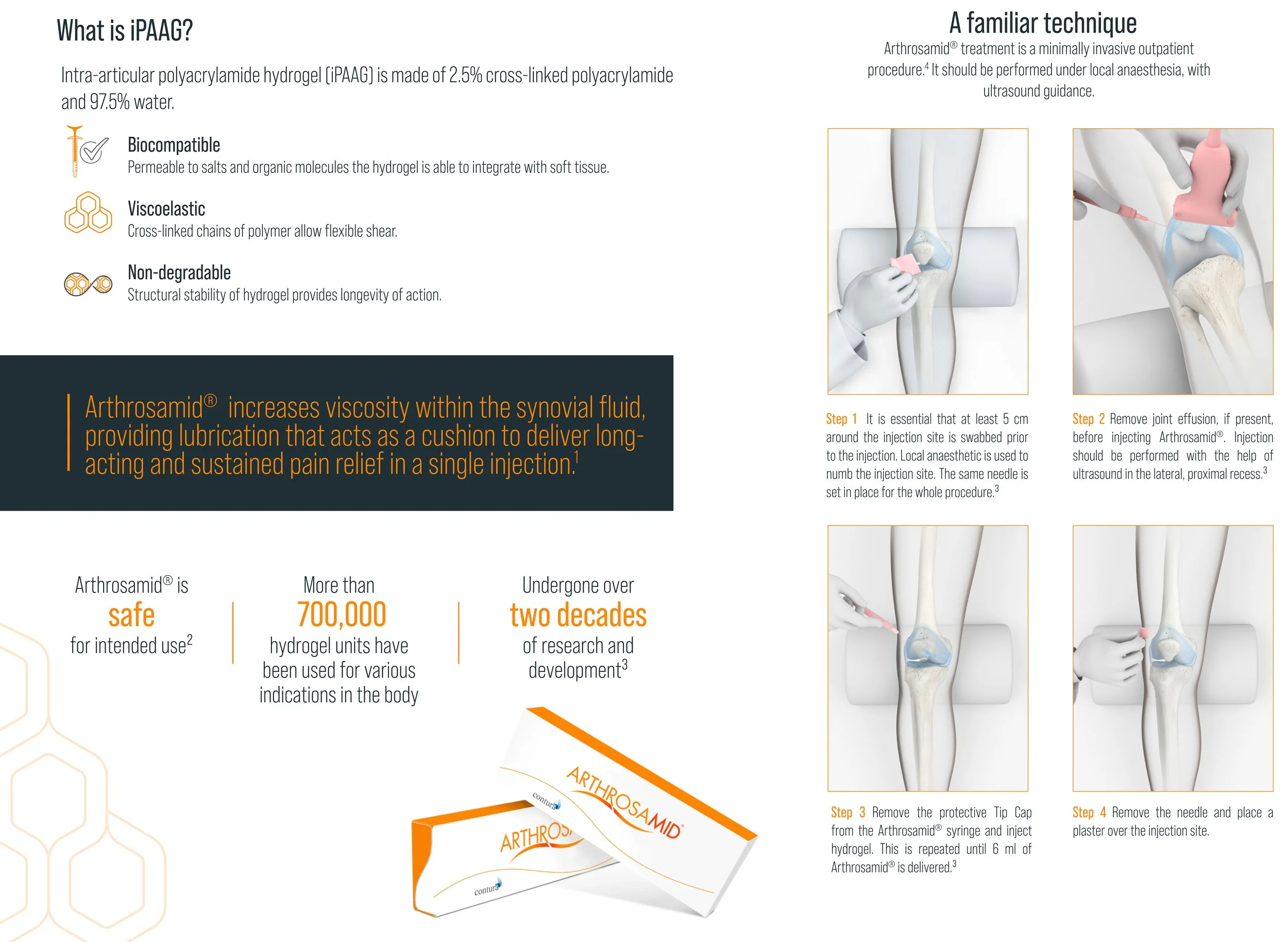
Before the injection, patients are typically prescribed an antibiotic to reduce the risk of infection.
On the day of treatment:
The patient lies comfortably on an examination table, and the knee is exposed and cleaned with an antiseptic solution.
An ultrasound device is used to view the knee joint in real time, with gel applied to the skin to improve image clarity.
Using these images, the clinician identifies the best point for needle insertion. A local anaesthetic may be given to minimise discomfort.
The needle is then guided into the joint space, and the Arthrosamid solution is carefully injected, allowing it to spread evenly.
After the procedure, patients are advised to rest and avoid strenuous activity for a short time. Pain relief or anti-inflammatory medication may be recommended if needed.
Contraindications
Arthrosamid® should not be used in certain situations, including:
If there is an active skin condition or infection near the injection site
If the joint is infected or severely inflamed
If a biodegradable joint injection (such as hyaluronic acid) is still present and has not yet been fully absorbed
If the patient has previously received another non-absorbable injectable or implant
If the patient has had knee replacement surgery or has foreign material in the joint
If knee arthroscopy has been performed within the past six months
In patients with haemophilia or those undergoing uncontrolled anticoagulant therapy
Documenting patient Ron through his Athrosamid journey, from having the procedure to 4 months later. Ron experienced a 90% improvement from the injection.
Reviews
PERSONALISED INJECTION THERAPY
Reduce your symptoms. Move pain-free. Let our team of experts guide you back to health.
Frequently Asked Questions
-
Arthrosamid® is an advanced injectable treatment used to manage knee osteoarthritis (OA) in patients experiencing ongoing pain and reduced mobility. The treatment contains a non-biodegradable hydrogel that integrates into the lining of the knee joint, helping to improve lubrication, reduce irritation, and provide long-term cushioning. At the St Albans Injection Clinic, Arthrosamid is offered as a non-surgical option for patients seeking lasting relief from knee osteoarthritis symptoms.
-
Arthrosamid is designed specifically for people with knee osteoarthritis, regardless of severity. It may help patients who experience:
Persistent knee pain
Joint stiffness
Reduced mobility and function
Difficulty with exercise or everyday activities
Many patients consider Arthrosamid when treatments such as physiotherapy, pain medication, or steroid injections have not provided sufficient long-term improvement.
-
Once injected into the knee, the hydrogel becomes incorporated into the synovial membrane that lines the joint. This creates a cushioning effect within the knee, helping to reduce friction and support smoother movement. Unlike steroid injections, which primarily target inflammation, Arthrosamid works by improving the overall joint environment over time.
-
Yes. At our St Albans clinic, all Arthrosamid injections are performed using ultrasound guidance. This allows the clinician to accurately place the treatment within the knee joint, helping to maximise precision and treatment effectiveness.
-
Clinical evidence suggests that a single Arthrosamid injection can provide symptom relief for up to two years or more in suitable patients. This makes it one of the longest-lasting injectable treatments currently available for knee osteoarthritis.
-
Arthrosamid is not designed to provide immediate pain relief. As the hydrogel gradually integrates with the joint lining, improvements typically develop over time. Many patients notice positive changes between one and six months after treatment, with benefits continuing to build as the knee becomes better lubricated and irritation decreases.
-
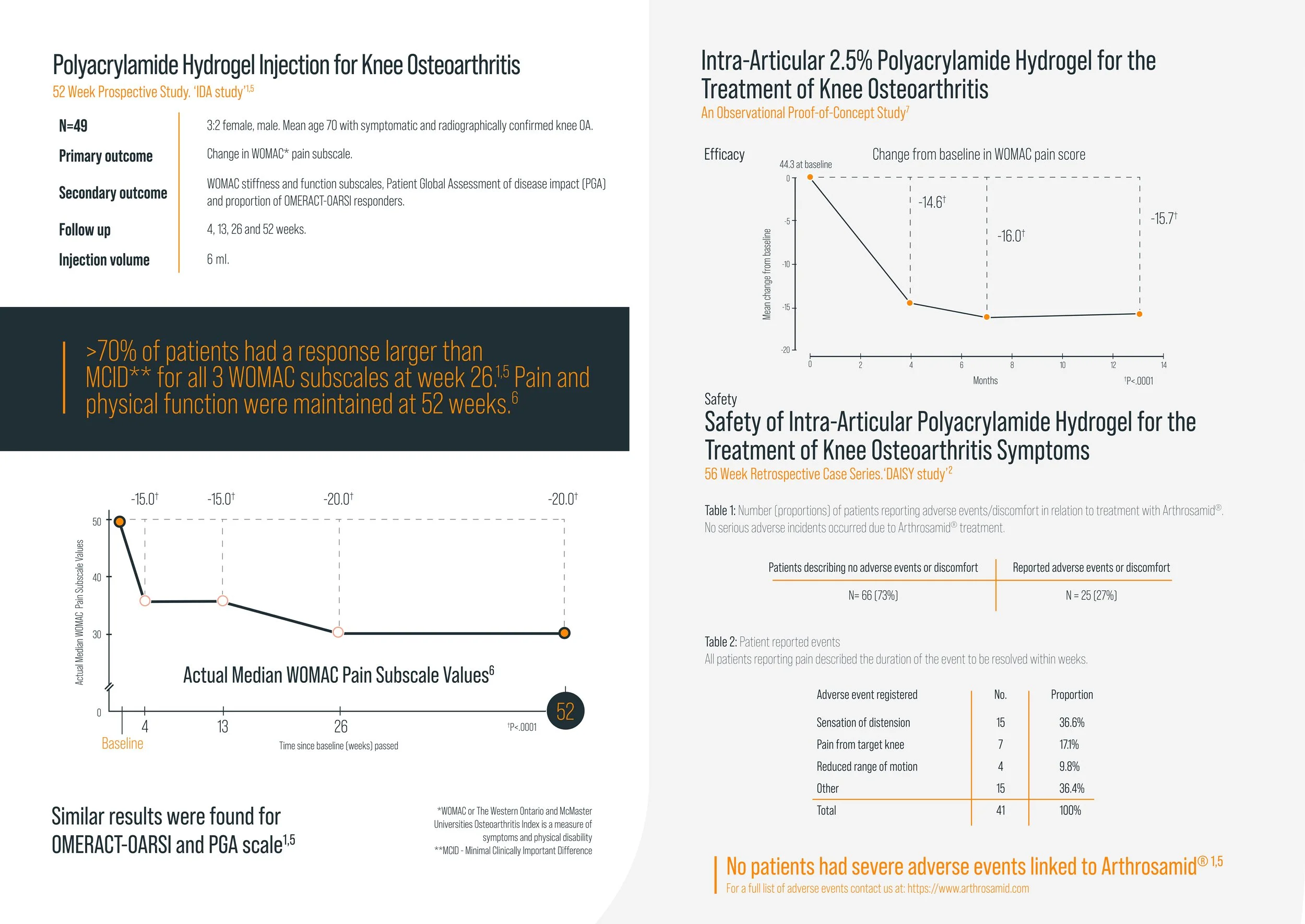
Research has shown encouraging outcomes for patients receiving Arthrosamid treatment:
Around 80% of patients under the age of 70 report a positive response
Approximately 60% of patients over 70 experience meaningful symptom improvement
Results can vary depending on factors such as age, overall health, and the severity of osteoarthritis. A consultation will help determine whether Arthrosamid is an appropriate option for you.
-
You may be a suitable candidate if you:
Have knee osteoarthritis affecting your quality of life
Continue to experience symptoms despite other treatments
Wish to delay or potentially avoid knee replacement surgery
Are looking for a long-lasting alternative to steroid injections
-
Compared with steroid injections and hyaluronic acid treatments, Arthrosamid offers a different approach. Rather than providing short-term symptom management, it becomes part of the joint lining to deliver long-lasting cushioning and support. In many cases, only a single treatment is required, whereas other injection therapies may need to be repeated regularly.
-
Patients commonly report:
Reduced knee pain
Less stiffness
Improved mobility and walking ability
Greater confidence in daily activities
Better participation in exercise and leisure activities
Enhanced overall quality of life
Individual results may vary.
-
Yes. Arthrosamid has undergone extensive clinical evaluation and has demonstrated a strong safety profile. Some patients may experience mild swelling, tenderness, or discomfort following the injection, but these effects are typically temporary and settle within a short period.
-
Arthrosamid may not be suitable for individuals who:
Have an active infection in or around the knee joint
Have inflammatory joint conditions such as rheumatoid arthritis
Have certain medical conditions that could affect healing
A full clinical assessment at the St Albans Injection Clinic will help determine whether Arthrosamid is the right treatment option for your individual needs.